Products · Software & Intelligence

AI-Powered Energy and Power Management for Vessels and Ports

The REGBES EMS and PMS optimise charging schedules around grid load, vessel turnaround times, and real-time energy pricing — reducing shore power costs and carbon footprint across the full fleet.

AI-powered optimisation Grid load management Shore-side & onboard Multi-source integration
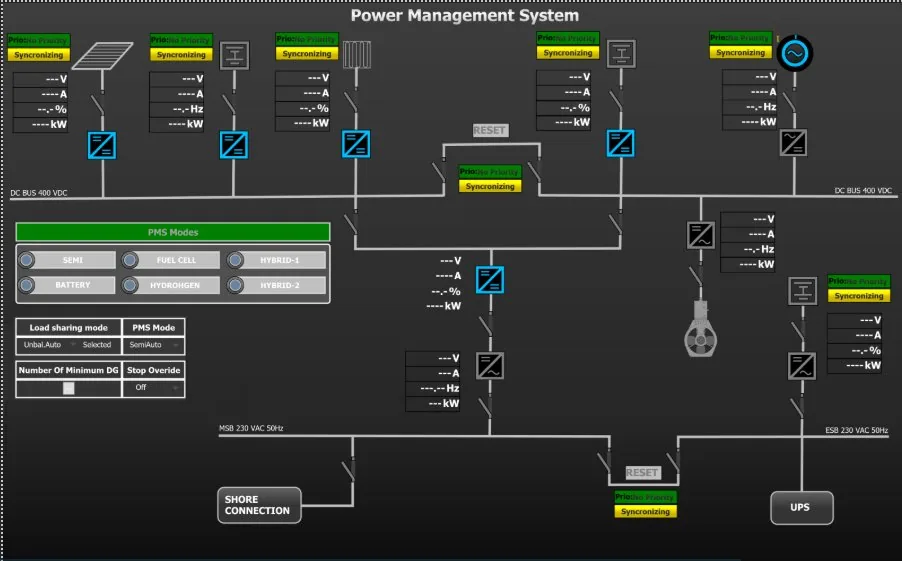
PMS interface — full bus diagram
The intelligence layer
Two systems. One integrated energy strategy.

Shore power hardware delivers the connection — the EMS and PMS determine how that connection is used. The Energy Management System operates shore-side, optimising when and how much power is drawn from the grid. The Power Management System operates onboard, coordinating between power sources — shore connection, battery, generator, and renewable inputs — to deliver the right power to the right system at the right time. Together they form the intelligence layer of a complete REGBES shore power installation.

EMS — shore-side grid and charging optimisation
PMS — onboard multi-source power coordination
Real-time data — grid pricing, vessel schedule, power demand
Deployed in EU-funded maritime R&D projects
Energy Management System
EMS — Shore-side grid and charging optimisation

The REGBES EMS operates at the port or terminal level, managing the interface between the shore power grid and the vessels being charged. It continuously monitors grid load, real-time energy pricing, and vessel turnaround schedules — and adjusts charging behaviour accordingly to minimise cost and grid impact without compromising vessel readiness.

Grid load optimisation
Distributes charging load across vessels and time windows to avoid grid demand peaks — reducing peak tariff exposure and grid stress.
Vessel turnaround schedule awareness
Charging plans are built around departure schedules — the EMS ensures vessels are charged to target by departure, not just as fast as possible.
Real-time energy pricing integration
Monitors live energy prices and shifts charging to lower-cost windows where vessel schedules allow — reducing overall shore power operating cost.
Renewable energy integration
Where solar or wind is available at the port, the EMS prioritises renewable generation in the charging mix — reducing grid draw and carbon footprint.
Live demo
Port Shore Power Management — Interactive Demo

Interactive demo — explore Overview, Loads, Power Quality, Alarms, and Setpoints views

REGBES Power Management System interface — DC bus, PMS modes, shore connection
Power Management System
PMS — Onboard multi-source power coordination

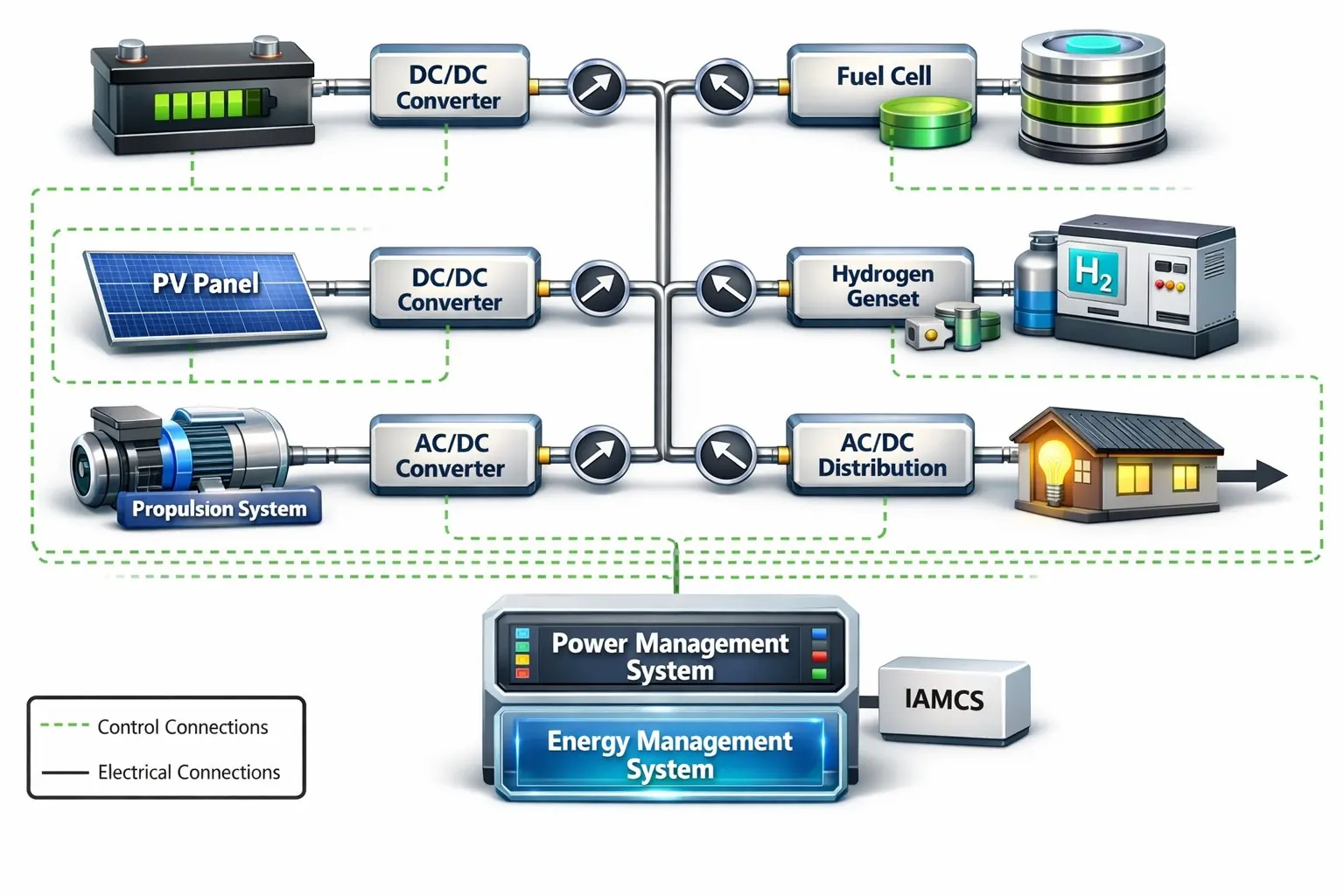
The REGBES PMS operates onboard the vessel, coordinating power flow between all available sources — shore connection, battery storage, hydrogen fuel cell, generator, and PV panels. It continuously monitors the state of each source and routes power to propulsion, onboard systems, and charging in the most efficient sequence, adapting in real time as conditions change.

Multi-source power coordination
Manages power flow between shore connection, battery, fuel cell, hydrogen genset, and PV panel — all coordinated through a single control layer.
Operating mode selection
Supports multiple operating modes — shore power, battery, fuel cell, hydrogen, and hybrid configurations — switchable based on voyage profile and source availability.
Propulsion and auxiliary integration
Coordinates power allocation between main propulsion, auxiliary systems, and battery charging — prioritising based on operational state and voyage phase.
Shore connection management
Manages the onboard side of the shore power connection — synchronisation, load transfer, and safe disconnection — integrated with the vessel's overall power architecture.
System architecture
How EMS and PMS work together
REGBES EMS PMS vessel power architecture — Hy2FISH project
Hy2FISH project — hydrogen, solar, battery and shore power architecture managed by REGBES EMS and PMS
Inputs the system works with

The EMS and PMS are designed to work with a wide range of power sources and data inputs — from simple shore-only installations to complex multi-source vessel architectures.

Shore power grid
Grid connection with real-time pricing and load monitoring
Battery storage
State of charge monitoring and charge/discharge optimisation
Hydrogen fuel cell
Fuel cell output coordination and efficiency optimisation
PV / solar panels
Renewable generation integration and priority scheduling
Propulsion system
Power demand from main propulsion and auxiliary drives
Vessel schedule
Departure times and turnaround windows for charging planning
In deployment
EMS and PMS in active projects

The REGBES EMS and PMS are being developed and validated through active EU-funded maritime electrification projects.

H2 · Solar · Battery
Hy2FISH

Hydrogen, solar, and battery-powered fishing vessel platform. REGBES develops the EMS and PMS for the full multi-source power architecture — coordinating hydrogen fuel cell, PV panels, battery storage, and shore connection across the vessel's operational modes.

REGBES role: EMS and PMS development · energy consumption optimisation · underwater noise and vibration measurements

Read more about Hy2FISH →
EU Horizon Europe
BlueBARGE

Offshore power barge for delivering electricity to moored and anchored vessels. The EMS coordinates power delivery from the barge grid connection to the CMS and ultimately to the vessel — optimising scheduling around vessel arrivals and barge energy capacity.

REGBES role: Cable management system development · EMS integration for barge-to-ship power scheduling

Read more about BlueBARGE →
Applications
Where EMS and PMS add value

The REGBES software layer is most valuable where multiple power sources, variable schedules, or cost optimisation requirements make manual power management impractical.

Port and terminal shore power

EMS manages grid load across multiple berths — coordinating charging schedules for multiple vessels simultaneously while minimising peak demand tariffs and grid impact.

Multi-source vessel power systems

PMS coordinates between shore connection, battery, fuel cell, and renewable generation onboard — optimising the power mix for each voyage phase and operating mode.

Offshore and barge power management

EMS coordinates power delivery from barge grid connection to vessel — managing scheduling, load balancing, and energy capacity across offshore deployments where grid access is limited.

Optimise your shore power operation

Talk to the REGBES team about your power architecture, vessel fleet, and operational requirements — we'll discuss how EMS and PMS can reduce cost and improve reliability.

Book a technical demo Request documentation